Advanced FDM Tooling for Greater Manchester's Electronics and Medical Technology Sectors
Greater Manchester's technology clusters are accelerating product development using advanced FDM 3D printing. For electronics and medical technology firms in Manchester and Cheshire, additive manufacturing allows for rapid iteration of enclosures and assembly fixtures. By utilizing specialized polymers like ESD-safe and high-temperature materials, hardware developers can protect sensitive components, test physical models under realistic clinical conditions, and compress validation timelines.
Greater Manchester Tech Clusters
Greater Manchester, Salford, and the Cheshire science parks (such as Alderley Park) have established themselves as premier hubs for electronics engineering, Internet of Things (IoT) hardware, and medical technology. From smart home energy sensors to handheld medical diagnostic tools, the regional tech ecosystem is growing rapidly.
For these sectors, the physical enclosure is a critical design element. Enclosures must protect sensitive electronics, maintain precise tolerances, fit comfortably in a user's hand, and look professional. Sourcing custom enclosures traditionally meant waiting weeks for international suppliers or paying high fees for low-volume injection moulds.
To maintain momentum, regional hardware developers are adopting advanced FDM (Fused Deposition Modelling) 3D printing. This technology allows design and engineering teams to produce functional prototypes and assembly fixtures in specialized polymers within days.
1. Protecting Electronics with ESD-Safe Polymers
Electrostatic discharge (ESD) is a major concern when designing and assembling electronic hardware. Static charge can build up on standard plastics (like PLA or PETG) and discharge unexpectedly into a printed circuit board, permanently damaging delicate microprocessors and integrated circuits.
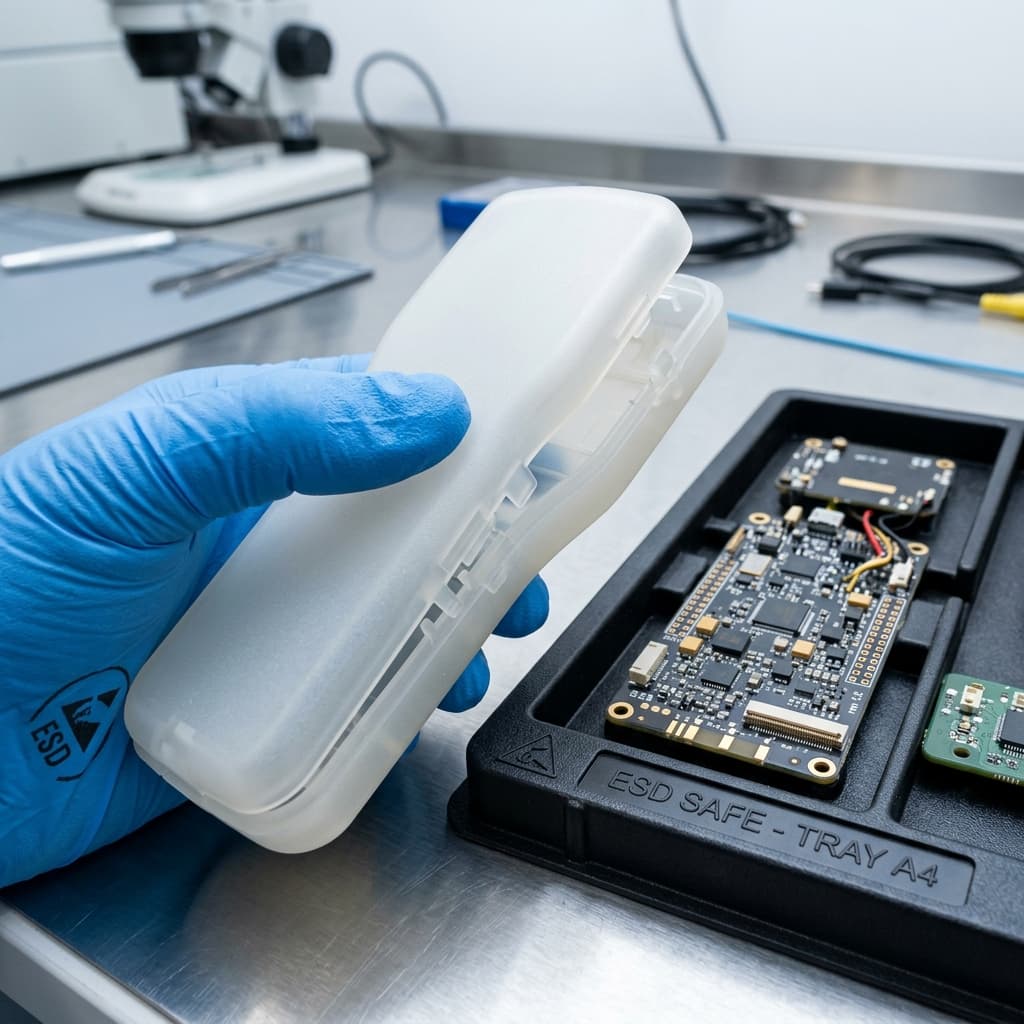
To protect electronics during assembly and functional testing, Manchester engineers use specialized ESD-safe materials (such as ESD-PETG or ESD-ABS): * Controlled Conductivity: ESD-safe filaments contain carbon additives that lower electrical resistance, giving the plastic a surface resistivity of 10^5 to 10^9 ohms. This allows static electricity to dissipate safely to ground, preventing sudden discharges. * Custom Assembly Nests: We print custom nests that hold circuit boards securely during soldering, inspection, or assembly, eliminating the risk of ESD damage. * Component Trays: Custom trays protect finished boards during transport between assembly stations.
Furthermore, selecting between ESD-PETG and ESD-ABS depends on the thermal and chemical demands of your assembly floor. ESD-PETG is easier to print, offers excellent dimensional stability, and resists common industrial cleaning agents. ESD-ABS, while more challenging to print due to thermal shrinkage, offers higher heat deflection and greater impact resistance, making it suitable for heavy-duty assembly lines.
2. Accelerating Medical Device Validation and Ergonomics
Medical technology firms face rigorous regulatory pathways and validation cycles. Before committing to mass production, design teams must test their physical devices with clinical professionals to validate ergonomics, weight balance, and physical interfaces.
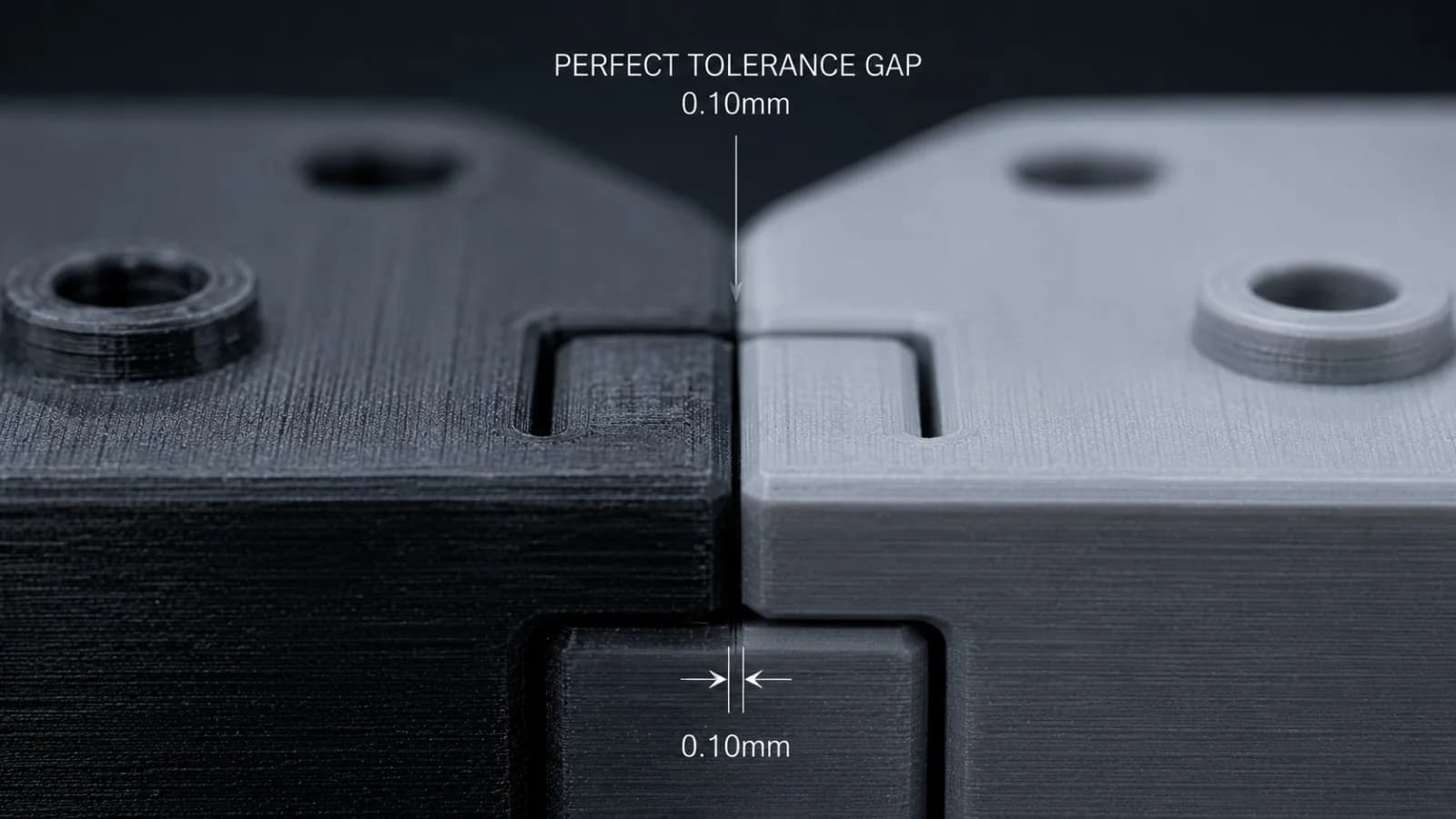
High-resolution FDM printing allows MedTech developers to produce complex, multi-part housings that replicate injection-moulded designs: * Ergonomic Form Studies: Printing form mockups allows clinicians to handle the physical device and evaluate grip shapes and button placements early in the design cycle. * Threaded Metal Inserts: We press-fit brass threaded inserts into printed enclosures to provide strong, metal-on-metal threads that allow devices to be assembled and disassembled repeatedly during testing. * High-Temperature Performance: Medical devices often generate internal heat. Prototyping in Polycarbonate (PC) or high-temperature PETG ensures the casing does not deform under the continuous operating temperature of the electronics.
When testing devices that require brief skin contact during user validation trials, material safety is a high priority. We select biocompatible-adjacent polymers that are certified for short-term skin exposure, ensuring clinical trials proceed safely without chemical concerns.
3. The Value of a Regional Manufacturing Partner
For Greater Manchester's fast-moving hardware developers, working with a local northern bureau like NovaLab 3D offers significant benefits: * Overnight Delivery: Parts printed in our North Yorkshire facility are shipped via express courier, arriving on your desk in Manchester or Salford within forty-eight hours of design approval. * Manual Design Audits: We perform manual design-for-manufacture (DFM) reviews on every project, identifying potential print failures, orientation weaknesses, or tolerance clearances before production starts. * Post-Processing Capabilities: We sand, prime, paint, and clear-coat prototypes to deliver retail-quality models for client presentations or clinical trials. * Integrated Hardware Assembly: We install heat-set inserts, seals, and gaskets in-house, delivering completed housings that are ready for immediate electronic integration.
Greater Manchester's tech sectors can bridge the gap from digital CAD to physical product, keeping intellectual property local and reducing development cycles.
Frequently Asked Questions
Keagan Walker
Founder & Lead Designer
NovaLab 3D is a boutique engineering and additive manufacturing studio based in Pickering, North Yorkshire. We provide B2B clients and product developers with direct access to lead engineering consulting, fast 48-hour turnarounds, and custom FDM production runs.