3D Printing in the North West of England: A Manufacturing Revolution Quietly Underway
The North West of England is experiencing a major shift in product design and production. By adopting industrial FDM and composite 3D printing, regional businesses in Manchester, Lancashire, and Merseyside are bypassing expensive tooling, compressing research and development cycles from months to days, and securing supply chains. This comprehensive guide explores the regional B2B landscape, specific industry use cases, and how additive manufacturing is enabling local SMEs to compete globally.
Introduction: The Silent Shift on the Shop Floor
The industrial identity of the North West of England runs deeper than in almost any other part of the United Kingdom. This is the region that built its global reputation on the steam-powered textile mills of Lancashire, the heavy engineering yards of Merseyside, and the chemical corridors of Cheshire. For generations, the mechanical DNA of the North was defined by subtractive metalwork, heavy foundry casting, and high-volume press tooling.
Today, a quieter but equally profound transformation is unfolding across these same industrial corridors. From Salford Quays to the advanced aerospace facilities in Samlesbury, manufacturing is becoming digital, distributed, and additive. Industrial 3D printing, once restricted to fragile visual models in design studios, has matured into a reliable manufacturing method for end-use, structural components.
Regional product developers, tooling engineers, and supply chain managers are shifting away from traditional subtractive processes for low-volume runs. By deploying high-performance polymers, composite carbon fibres, and electro-static dissipative materials, North West businesses are solving old problems with new efficiency.
1. The Regional Macro-Economics of Additive Manufacturing
To understand why the North West has become such a fertile ground for 3D printing, we have to look at the structural layout of its economy. The region is home to one of the largest concentrations of manufacturing businesses in Europe, with over eighteen thousand engineering and production companies operating across Lancashire, Greater Manchester, Merseyside, and Cheshire.
essentially, the vast majority of these businesses are small and medium enterprises (SMEs) employing fewer than fifty people. Unlike multinational conglomerates, these companies do not have the capital to absorb tens of thousands of pounds in up-front tooling costs for every new product variant. If a company in Preston wants to launch a new sensor housing, commissioning an injection mould tool for ten thousand pounds is a massive financial risk.
Furthermore, traditional manufacturing methods have hidden overheads. Sourcing tooling from international suppliers requires navigating complex logistics, import tariffs, customs clearances, and shipping delays. If a metal tool arrives with a dimensional error, the manufacturer must send it back or pay a local toolroom to modify it, adding weeks to the timeline.
Additive manufacturing levels this playing field. Because FDM (Fused Deposition Modelling) builds components layer-by-layer directly from digital CAD files, there are no tooling costs, no minimum order quantities, and no machine setup penalties. A ten-person design agency in Liverpool can design, test, and manufacture a custom casing with the same mechanical properties and surface finish as a global electronics corporation.
By eliminating the capital expenditure barrier of tooling, 3D printing accelerates time-to-market. A product development cycle that traditionally took six months of back-and-forth communication with international toolmakers is compressed into a series of rapid local iterations.
2. Aerospace and Defense Integration: Lancashire’s Advanced Corridor
If Greater Manchester is the software and design heart of the region, Lancashire is its heavy aerospace and automotive engine. The aerospace corridor running through Warton and Samlesbury, anchored by BAE Systems and its vast network of Tier-1 and Tier-2 suppliers, represents the cutting edge of UK advanced engineering.
In this high-stakes environment, dimensional accuracy and structural integrity are non-negotiable. While fly-away aircraft components undergo years of rigorous certification, the tooling, jigs, and fixtures used to assemble those aircraft must be produced rapidly.
Historically, coordinate-measuring templates and alignment fixtures were milled from block aluminum or steel. This subtractive approach has three main disadvantages: * Weight and Ergonomics: A steel fixture can easily weigh ten kilograms. Over an eight-hour shift, assembly technicians handling these heavy tools face physical fatigue, increasing the risk of human error. * Lead Times: Waiting for an internal toolroom or external CNC bureau to cut a custom fixture can delay assembly lines for weeks. * Cost: Machining a single-use template involves significant material waste and high programmer rates.
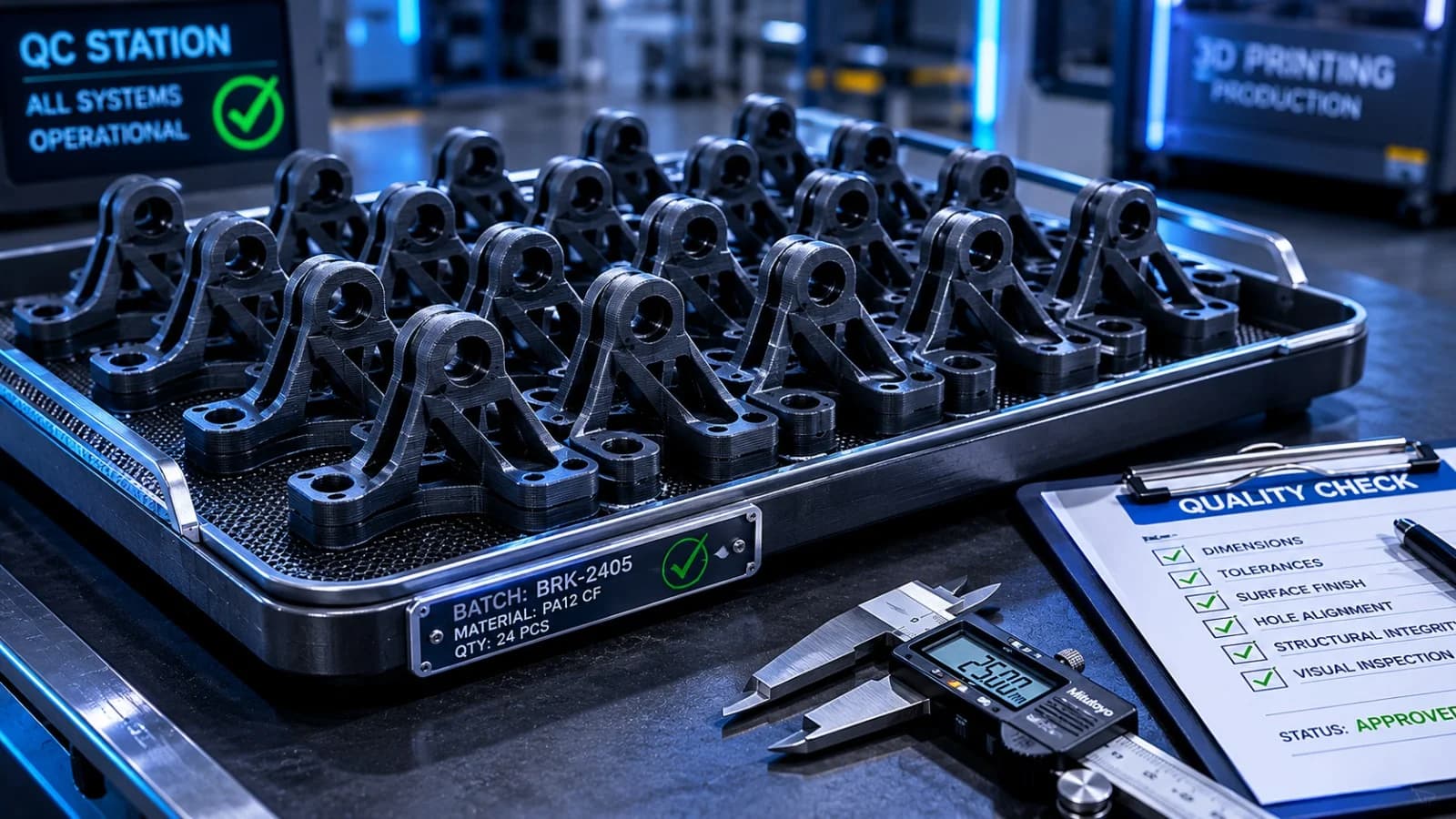
By switching to composite FDM printing, aerospace suppliers are printing jigs using carbon fibre reinforced nylon (PA6-CF). This material offers structural stiffness approaching aluminum but at a fraction of the weight. A fixture that weighed eight kilograms in steel can be printed in PA6-CF at just over one kilogram, making it far safer and easier for operators to handle.
Furthermore, polymer fixtures are non-marring. When positioning delicate carbon-composite wings or anodized fuselage panels, a metal fixture can easily scratch the surface, leading to expensive scrap or rework. A printed nylon composite fixture holds the part securely without any risk of surface damage.
For advanced verification, engineers also utilize 3D printed coordinate-measuring machine (CMM) holding fixtures. These parts require extreme dimensional stability, which is achieved by incorporating carbon micro-fibres into the polymer matrix. The carbon fibres restrict thermal contraction, ensuring the fixture remains dimensionally stable under variable laboratory conditions, maintaining inspection accuracy.
3. Automotive Supply Chains: Merseyside and Leyland
Merseyside and the Leyland area of Lancashire have long been associated with automotive assembly. Although the global automotive industry has consolidated, the local supply chain of toolmakers, presswork specialists, and component suppliers remains highly active.
In automotive manufacturing, assembly line downtime can cost thousands of pounds per minute. When a custom alignment guide or bracket on a robotic arm fails, the manufacturer cannot wait weeks for a replacement part to be machined and shipped.
Local 3D printing provides an immediate emergency response. By maintaining digital CAD libraries of shop-floor components, maintenance teams can send a file to a regional printing bureau like NovaLab 3D and have a functional replacement part printed in high-durability polymers like ASA or PETG within twenty-four hours.
ASA (Acrylonitrile Styrene Acrylate) has become the material of choice for outdoor and industrial shop-floor environments in the North West. Unlike standard ABS, which degrades, yellows, and becomes brittle under ultraviolet light and temperature shifts, ASA is highly UV-stable and chemical-resistant. It easily resists shop-floor cutting fluids, lubricants, and cleaners, ensuring that custom enclosures and brackets survive for years in harsh environments.
For flexible components, automotive developers use TPU (Thermoplastic Polyurethane). This rubber-like material allows for the rapid fabrication of custom gaskets, protective sleeve covers, and non-slip pads for automated grippers, bypassing the need for expensive silicone molding tools.
During validation cycles, printed components serve as functional design mockups. If a specialist vehicle builder in Leyland needs to verify the routing of a wire harness around an engine block, printing a full-scale mockup of the mount bracket in PETG allows them to check clearances and physical fitment before committing to production-grade metal tooling.
4. Electronics, IoT, and MedTech: Greater Manchester’s Tech Boom
Greater Manchester, Salford, and the Cheshire science corridors (such as Alderley Park) have established a global reputation for digital innovation, Internet of Things (IoT) hardware, and medical technology. Startups and established engineering firms are designing everything from smart home energy monitors to handheld medical diagnostic equipment.
For these sectors, the integration of electronics and physical enclosures is a constant design challenge. Two major requirements define this space:
Static Dissipation (ESD-Safe Materials)
Delicate integrated circuits and microprocessors can be permanently damaged by electrostatic discharge during assembly or housing installation. Standard 3D printing filaments like PLA are electrical insulators, meaning they can accumulate static charge and discharge it unexpectedly into a circuit board.
To protect these devices, electronics developers in Manchester use ESD-safe polymers (such as ESD-PETG). These materials contain microscopic carbon additives that give the plastic a controlled surface resistivity, allowing static electricity to dissipate safely to ground. This makes it possible to print custom assembly nests, programming fixtures, and protective transport trays that keep sensitive electronics completely safe.
Ergonomic and Clinical Validation
Medical technology companies must validate their physical designs with clinical professionals early in the design cycle. A device must fit comfortably in a surgeon's hand or attach securely to a patient's bedside rail.
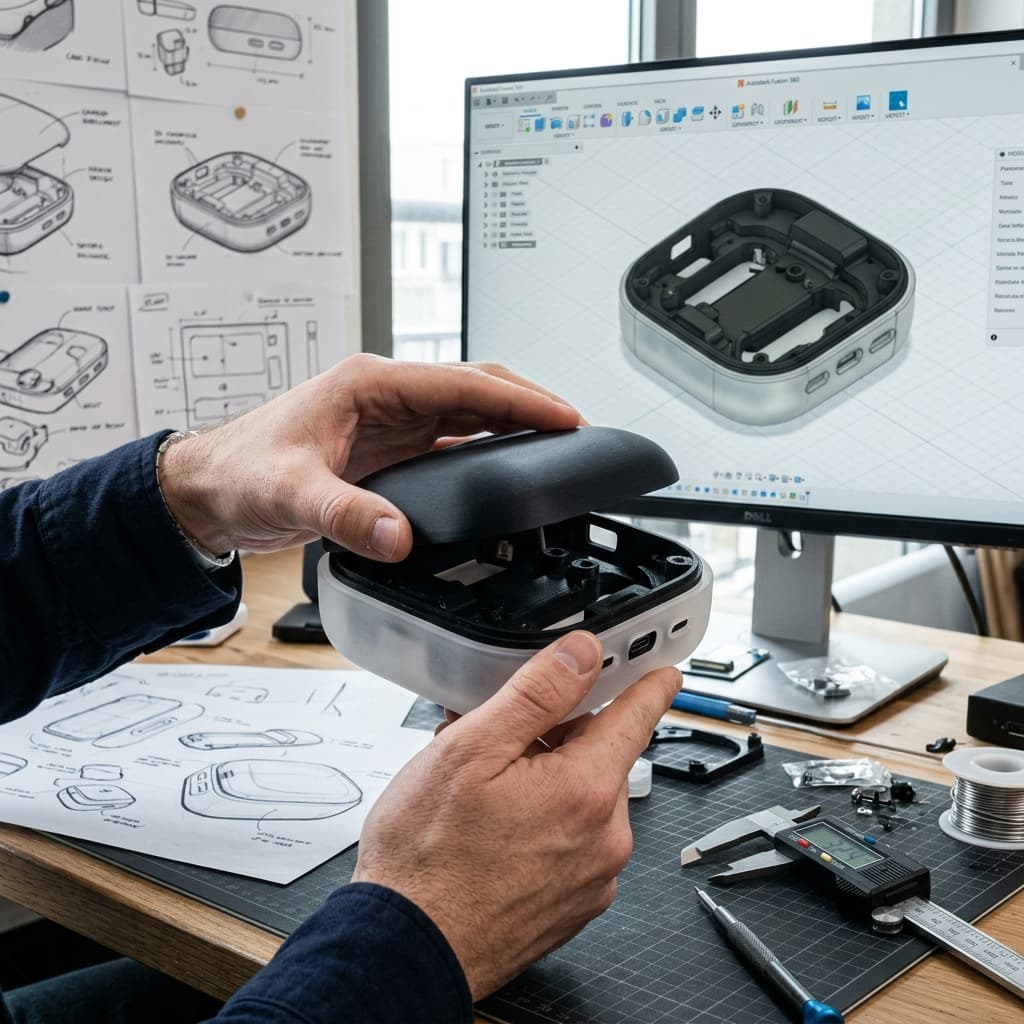
High-resolution FDM printing allows medical designers to produce multi-part prototypes with tight mechanical tolerances. Enclosures can be printed with functional snap-fit joints, integrated cable routing, and threaded inserts, allowing clinicians to test the physical device under realistic conditions. If the feedback suggests a minor change to a button placement, the CAD model is adjusted, and a revised prototype is printed immediately, saving months of validation time.
Designing for these high-precision enclosures requires careful management of internal heat. Many IoT devices contain power-management circuitry that generates significant heat. In these cases, prototyping in Polycarbonate (PC) or high-temperature PETG ensures that the enclosure remains structurally sound and does not deform under the continuous operating temperature of the internal electronics.
5. Sourcing and Logistics: The Advantage of a Northern Partner
When North West businesses look to source 3D printing services, they are often faced with a choice between national online brokers or local regional bureaus. While online brokers can print a file, they frequently lack the engineering support, material expertise, and quick shipping times that manufacturing businesses need.
Geographically, the North of England is separated by the Pennines, which can create minor transport hurdles during winter. However, by establishing a partnership with a regional bureau like NovaLab 3D, based in North Yorkshire, North West firms secure highly responsive logistics.
Partnering with a northern-based bureau offers distinct advantages: * Fast Response and Shipping: Proximity matters. Shorter shipping distances mean that a part printed at our North Yorkshire facility can be dispatched via overnight courier and arrive on a shop floor in Manchester or Preston the next morning. * Direct Technical Reviews: We do not just run your files through an automated system. Our engineers perform a manual design-for-manufacture (DFM) review on every project. If we notice a thin wall that might fail, a hole size that needs adjusting for a press-fit, or an orientation that risks Z-axis cleavage, we contact you directly to discuss solutions. * Material Specialization: We stock a deep inventory of engineering-grade polymers, including carbon-reinforced filaments, ASA, PETG, and TPU, ensuring your parts are built for functional performance, not just visual display. * Dedicated Regional Support: Our proximity allows us to build long-term relationships with regional clients. If a complex assembly requires a physical consultation, our engineers can discuss design clearances, insert placements, and assembly alignment face-to-face.
6. Sourcing the Future: Multi-Material, Composites, and AI
Looking ahead, the role of additive manufacturing in the North West will continue to expand as new technologies emerge. The transition from simple prototyping to advanced composite fabrication is being accelerated by two key developments:
Multi-Material Deposition
Using advanced multi-nozzle systems, printers can deposit different materials in a single run. For example, a rigid ASA electronics enclosure can be printed with a soft TPU gasket directly fused to the joint interface, creating a watertight seal without manual assembly. This reduces assembly part counts, eliminates secondary installation steps, and lowers production cost.
Continuous Carbon Fibre Reinforcement
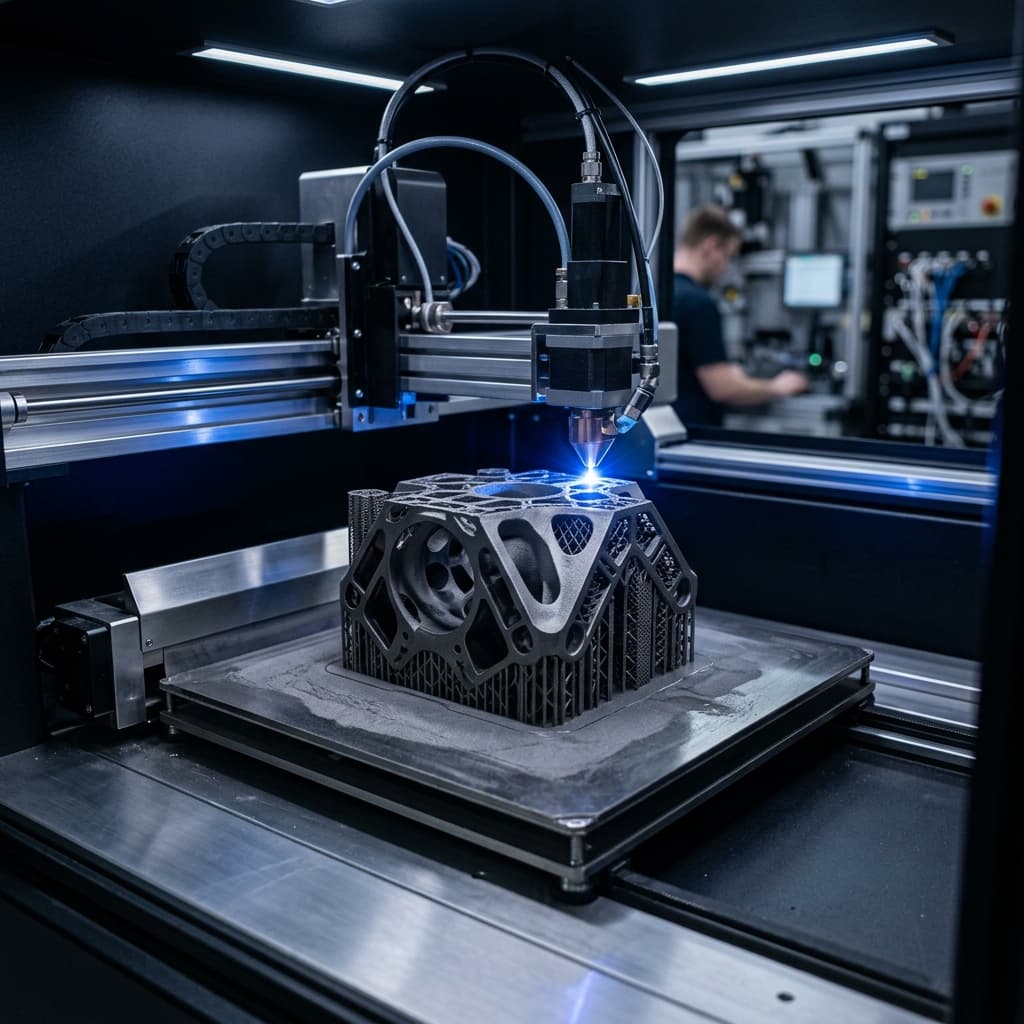
While current carbon-reinforced filaments contain short, chopped fibres that increase stiffness, next-generation platforms deposit continuous strands of carbon fibre along specific stress paths. This technique yields components with tensile strengths that match or exceed aluminum, allowing regional manufacturers to replace structural metal brackets with lightweight printed composites, saving weight on automotive and robotics assemblies.
Frequently Asked Questions
Keagan Walker
Founder & Lead Designer
NovaLab 3D is a boutique engineering and additive manufacturing studio based in Pickering, North Yorkshire. We provide B2B clients and product developers with direct access to lead engineering consulting, fast 48-hour turnarounds, and custom FDM production runs.