Rapid Prototyping for North West Product Designers: Cut Weeks off Your Development Cycle
North West product designers are discovering that local 3D printing is the key to faster time-to-market. By compressing prototype lead times from weeks to under forty-eight hours, additive manufacturing allows design studios in Manchester and Liverpool to run multiple iteration cycles at a fraction of the cost of traditional tooling. This guide explains how to design prototypes for functional testing, select the right engineering polymers, and validate ergonomic layouts before manufacturing.
The Prototyping Bottleneck
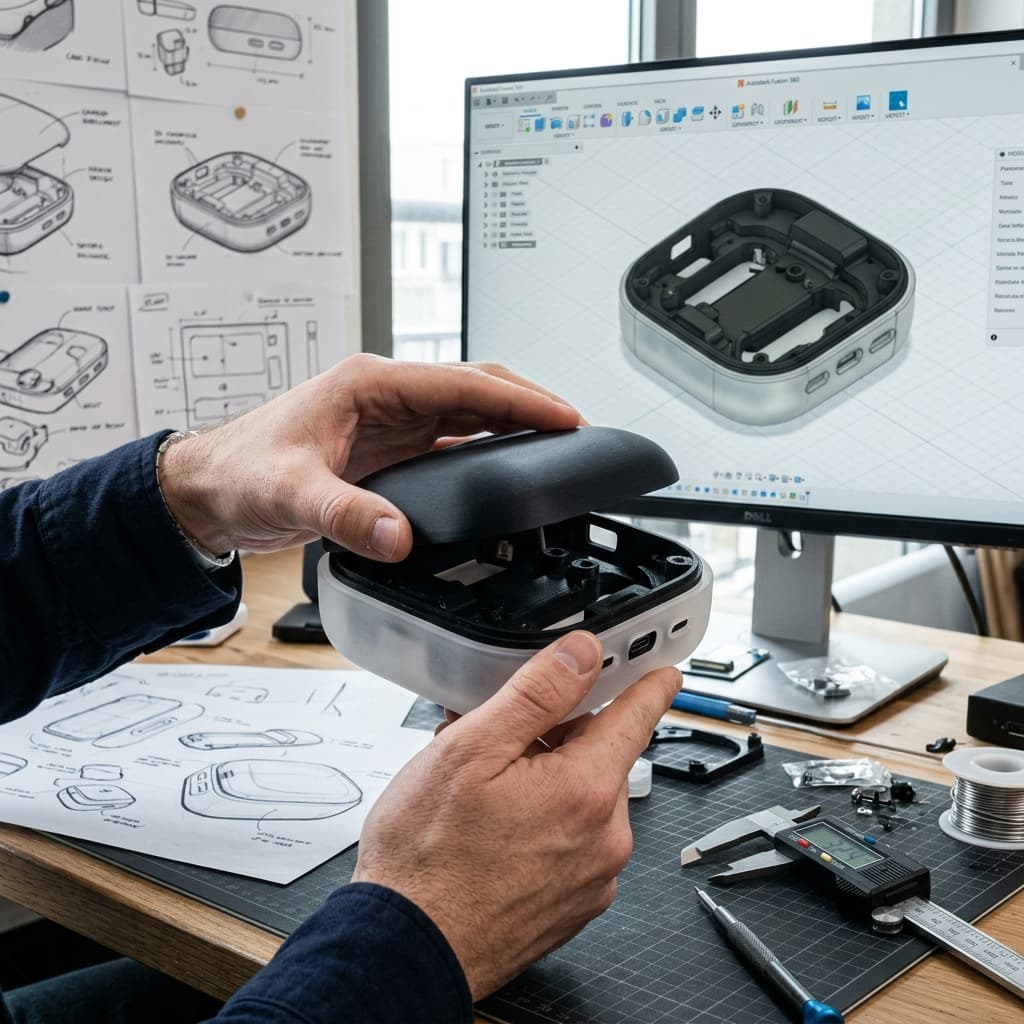
In the competitive landscape of product design, speed is one of the most critical factors determining success. Whether you are an industrial designer in Manchester’s MediaCityUK developing a new smart home hub, or a medical hardware engineer in Liverpool designing patient-monitoring cases, you share the same challenge. That challenge is bridging the gap between a polished digital CAD model and a physical, tactile prototype.
Historically, this step represented a major bottleneck. Design agencies in the North West frequently outsourced prototype fabrication to distant bureaus or overseas manufacturers. This led to typical lead times of one to three weeks per iteration. When a project requires three or four rounds of physical reviews to validate clearance fits, button alignments, and human factors, the development timeline stretches by months.
Such delays are commercially costly. Every week spent waiting for a prototype is a week delayed from market entry, increasing development costs and putting project budgets under strain.
Regional additive manufacturing removes this bottleneck. By shifting prototype production to a specialized local bureau like NovaLab 3D, designers can compress their iteration loops to under forty-eight hours.
1. What Real Rapid Prototyping Looks Like
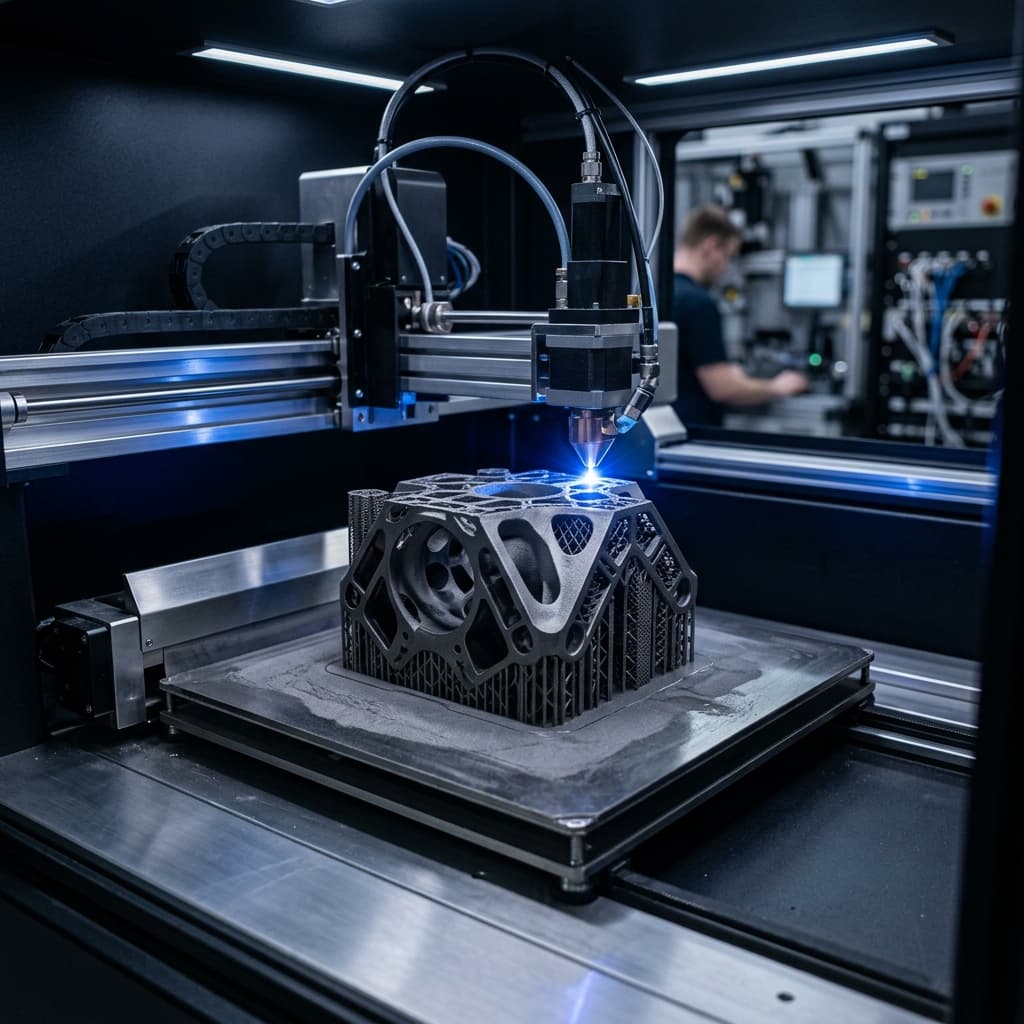
To maximize the benefits of additive manufacturing, designers must understand how FDM (Fused Deposition Modelling) differs from traditional prototyping.
Same-Day Turnaround on Small Components
Because 3D printing requires zero tooling or complex machining setup, production can start immediately after CAD approval. Small brackets, custom gears, and enclosure lids can be printed in hours and dispatched via local courier to Manchester, Liverpool, or Preston for next-day review.
Low Cost Per Iteration
With traditional tooling, modifying a design means scrapping a mould and cutting a new one, resulting in major financial penalties. In 3D printing, the fifth iteration costs the same as the first. Designers can test multiple physical variations in parallel without blowing the project budget.
Functional Materials for Physical Testing
Modern 3D printing is not just for visual display models. Using engineering polymers like PETG, Nylon, or composite carbon fibres, designers can print parts that have genuine mechanical properties. These components can be mechanically loaded, mounted to real hardware, and tested in operational environments.
2. Designing Prototypes for Functional Validation
When preparing a CAD model for rapid prototyping, keeping a few FDM-specific design rules in mind will ensure a better print:
Dimensional Tolerances
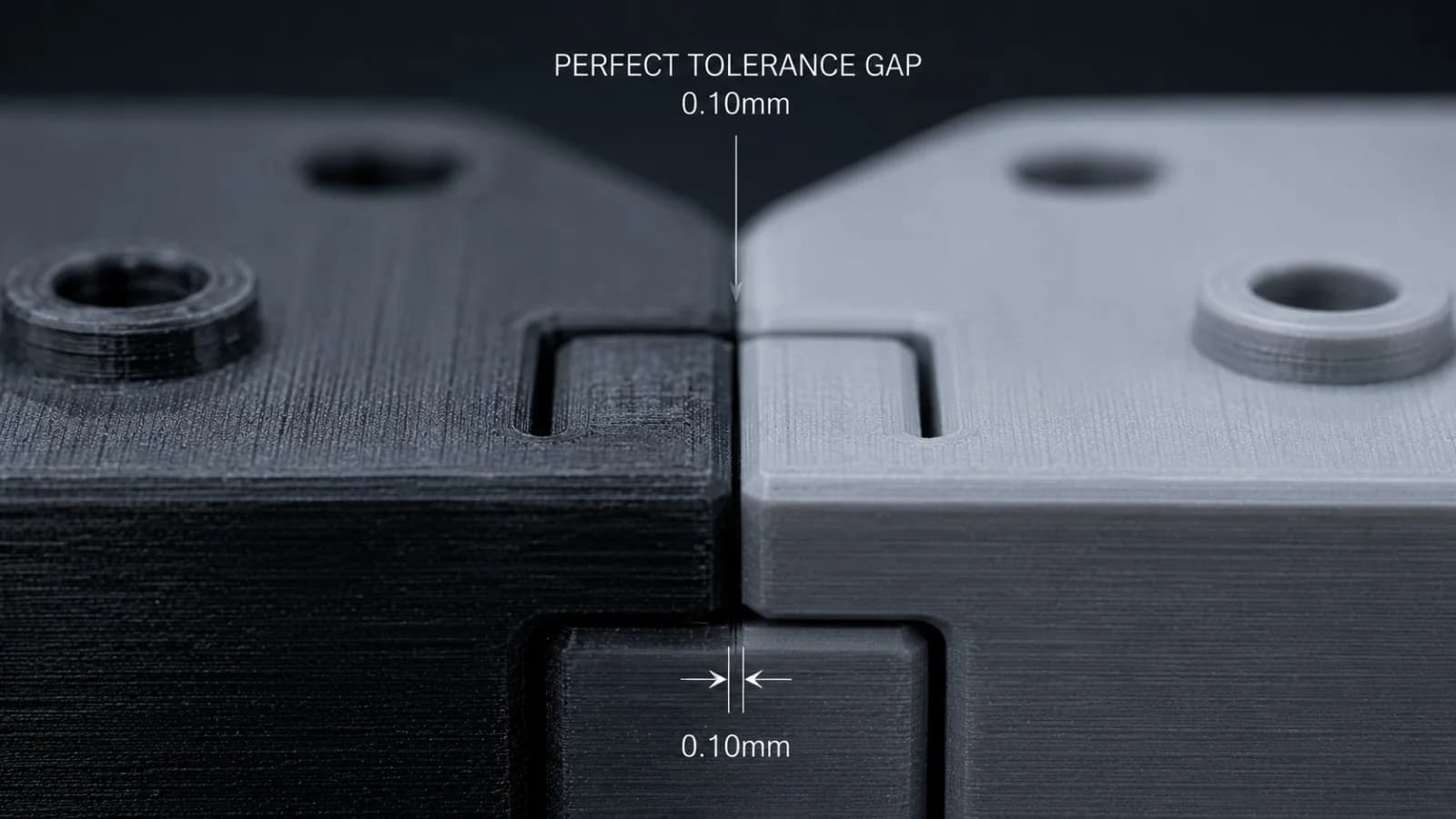
Standard FDM printers have a clearance variance of plus or minus 0.2 millimetres. If you are designing interlocking components, apply a standard clearance of 0.2 millimetres for a firm friction fit, or 0.3 millimetres for components that need to slide smoothly.
Overhangs and Chamfers
Avoid steep overhangs (angles greater than 45 degrees from the vertical axis) as they require temporary support structures. Support material increases material waste, extends print times, and leaves rough surfaces that require manual sanding. Replace steep angles with 45-degree chamfers to achieve a clean, support-free print.
Heat-Set Inserts for Reusable Threads
If your prototype requires frequent assembly and disassembly during testing, do not screw bolts directly into the plastic. Instead, design bosses to accept heat-set brass threaded inserts. This provides strong, metal-on-metal threads that can be fastened hundreds of times without stripping.
3. Material Selection for Ergonomics and Fitment
Choosing the right material depends on what you are trying to validate in your prototype: * PLA: Best for fast, low-cost form studies, fitment checks, and early-stage aesthetic reviews. * PETG: Excellent for functional prototypes requiring moderate flexibility, impact resistance, and snap-fit features. * TPU: The go-to polymer for flexible seals, gaskets, soft-touch buttons, and protective cases. * Carbon-Reinforced Composites: Ideal for lightweight, structural parts, robotic linkages, and brackets that require maximum rigidity.
By partnering with a northern supplier, product designers can consult directly with manufacturing engineers. This close relationship ensures that file clearances, print orientations, and material selections are optimized for physical success.
Frequently Asked Questions
Keagan Walker
Founder & Lead Designer
NovaLab 3D is a boutique engineering and additive manufacturing studio based in Pickering, North Yorkshire. We provide B2B clients and product developers with direct access to lead engineering consulting, fast 48-hour turnarounds, and custom FDM production runs.