Designing for CNC Machining vs FDM 3D Printing
CNC machining offers superior surface finishes and tight tolerances for metals, while 3D printing excels in geometric freedom, lightweight internal infills, and zero setup costs for plastics.
Subtractive vs. Additive Design Thinking
When designing mechanical parts, engineers must select the appropriate manufacturing process early. CNC (Computer Numerical Control) machining and FDM (Fused Deposition Modelling) 3D printing are two of the most popular methods for producing prototypes and end-use parts.
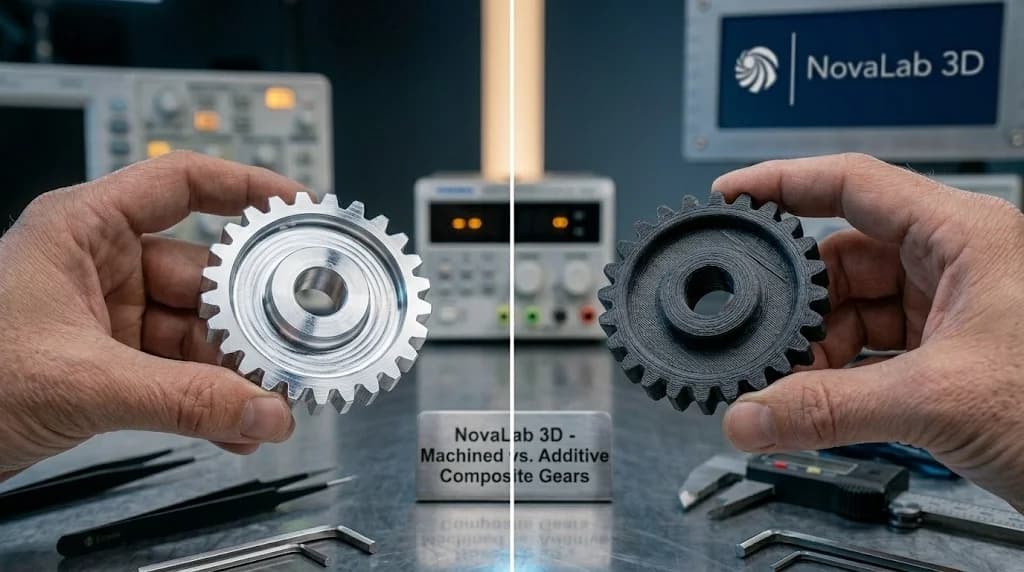
However, they operate on opposing physical principles: CNC is subtractive (carving away metal or plastic from a solid block), while FDM is additive (building the part layer-by-layer). Designing a part for one process and attempting to manufacture it with the other leads to high costs and part failures.
CNC machining is ideal for high-precision, metallic, and simple geometries. FDM 3D printing excels at complex, hollow, and organic shapes that would be impossible to mill.
1. Geometric Constraints
- CNC Machining Constraints: CNC tools are circular rotating cutters. This means you cannot cut sharp internal 90-degree corners; there will always be a radius matching the cutter's shape. Deep narrow pockets, hollow internal cavities, and complex undercuts are either extremely expensive or impossible to mill.
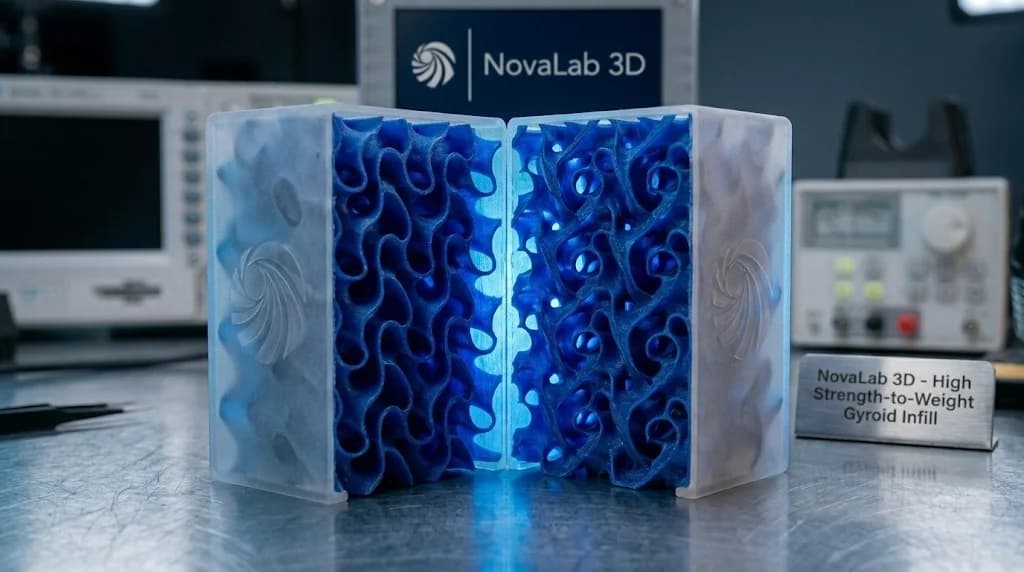
- FDM 3D Printing Freedom: Additive manufacturing can print internal channels, hollow honeycombs, and complex organic curves with ease. Overhangs require support material, but undercuts do not restrict the process.
2. Material Waste and Economics
- CNC Milling: Can carve a part out of block aluminium, steel, or engineering plastics (like Delrin or Nylon). However, you often pay for the material wasted during cutting. If a part has a 90% cavity volume, you are paying for a solid block of metal and throwing away 90% of it as swarf.
- FDM Printing: Deposition is highly efficient. The printer deposits plastic only where it is needed. Internal volumes are filled with lightweight gyroid structures, saving material and weight.
3. Production Speed
- CNC Machining: Requires detailed fixture setups, toolpath programming (CAM), and operator supervision. A single custom part can take days to set up.
- 3D Printing: Tooling-free. Slicing takes minutes, and printing starts immediately. It is much faster for a single prototype.
Technical Manufacturing Consultation
Unsure whether your component should be milled or printed? NovaLab 3D provides technical manufacturing reviews for B2B engineering firms in Leeds, York, and Pickering. Send us your STEP files for a free manufacturing audit.
Frequently Asked Questions
Keagan Walker
Founder & Lead Designer
NovaLab 3D is a boutique engineering and additive manufacturing studio based in Pickering, North Yorkshire. We provide B2B clients and product developers with direct access to lead engineering consulting, fast 48-hour turnarounds, and custom FDM production runs.